

Coji in a suit

Coji for organisations

Let's make support a little more accessible.

Coji is assistive software designed to improve wellbeing and help people with disabilities stay in employment and education.

We're exploring partnerships and community pilots with universities, employers, disability charities, Employee Assistance Programmes and education and employment support providers. Together, we want to understand how Coji can complement existing services.

2.6×more likely to leave

People who frequently experience burnout at work are 2.6× more likely to be actively seeking another job and 63% more likely to take a sick day.

Gallup (2018), Employee Burnout: The 5 Main Causes (opens in a new tab)

Overload affects retention, absence, performance and people's ability to participate sustainably.

Coji helps people understand their capacity, manage competing demands and identify the support they need before overload becomes harder to manage.

For employers, universities, schools, disability services, charities and organisations supporting people.

Backed and supported by

The King's TrustFunding and organisation support. NatWest AcceleratorAccelerator programme. Warwick Innovation DistrictPowered by the University of Warwick. The King's TrustFunding and organisation support. NatWest AcceleratorAccelerator programme. Warwick Innovation DistrictPowered by the University of Warwick. The King's TrustFunding and organisation support. NatWest AcceleratorAccelerator programme. Warwick Innovation DistrictPowered by the University of Warwick.

Evidence into everyday support

Research that informs our approach

These studies inform our approach; they did not evaluate Coji. Better wellbeing and employment and education retention are our ambitions. We have not yet demonstrated those outcomes for Coji.

Energy

Attention can vary by up to 40% across the day

Demanding work at the wrong time can mean more effort, slower performance and unnecessary overload.

Coji Energy helps people learn their own capacity patterns and plan higher-demand activities more intelligently.
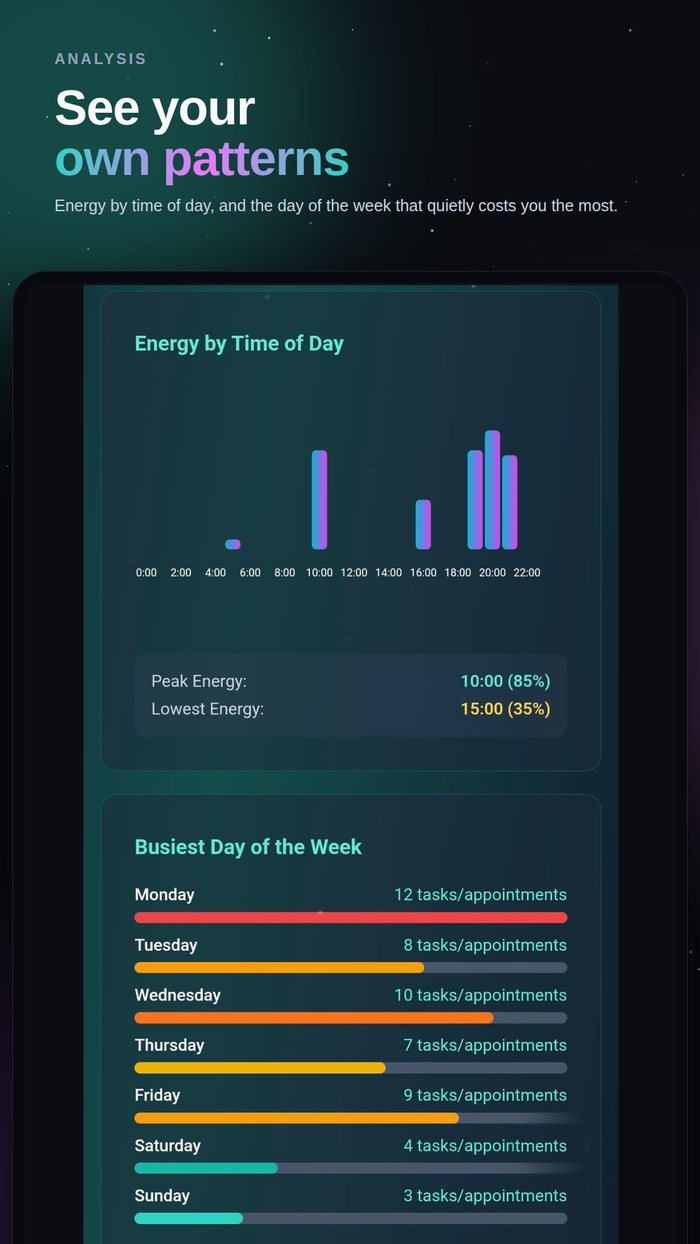
Coji Energy showing capacity patterns across the day

A systematic review of healthy adult men found time-of-day differences of 7.8%–40.3% in attention. The best time varied by person, task and study.

Munnilari et al., including Pullinger (2023): Diurnal variation in variables related to cognitive performance: a systematic review (opens in a new tab)
Neuro Map

Personalised support can help people stay able to participate, work and remain engaged.

Support works best when it fits the person.

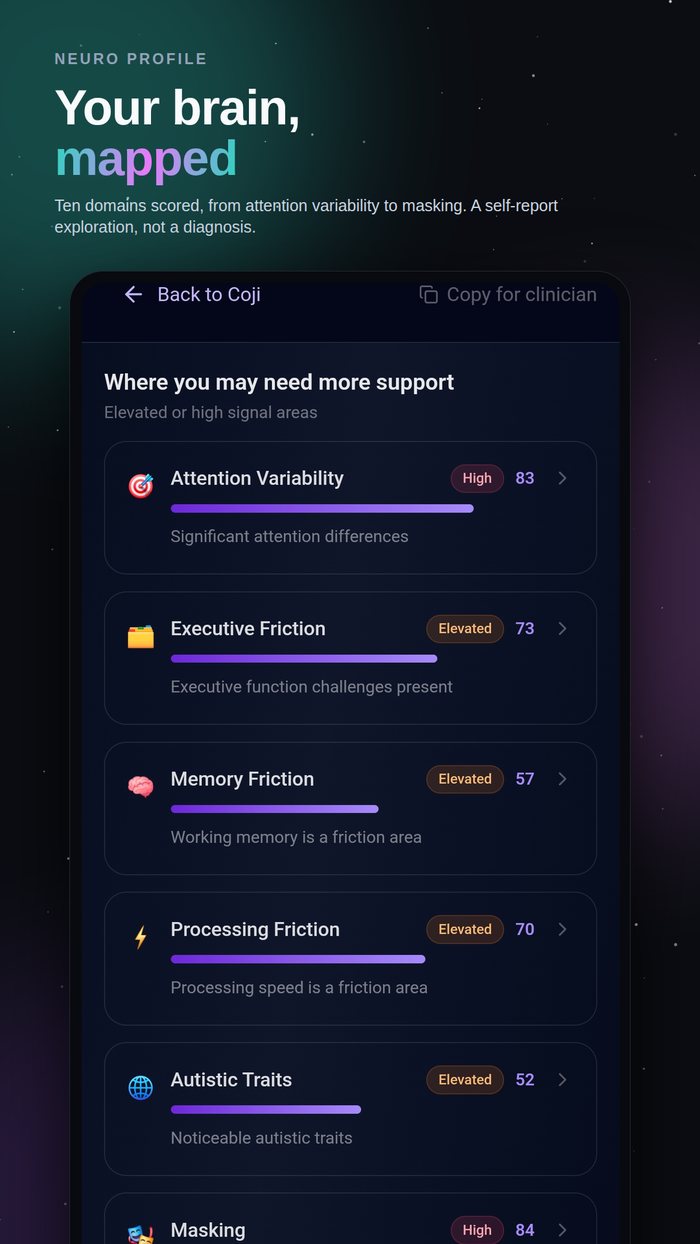
Coji Neuro Map helps people identify and communicate their strengths, challenges, sensory needs, working preferences and support needs.

Coji Neuro Map showing attention, memory and sensory areas

In this UK study, people with mental impairments were 10 percentage points less likely to be in employment than those without when no workplace adjustments were in place. With two or more adjustments, the study found no difference in employment rates between the groups.

Chandola & Rouxel (2021): The role of workplace accommodations in explaining the disability employment gap in the UK (opens in a new tab)

Journal

Journalling can improve mental wellbeing

Earlier reflection can help people recognise when their wellbeing is changing and communicate when they need support.

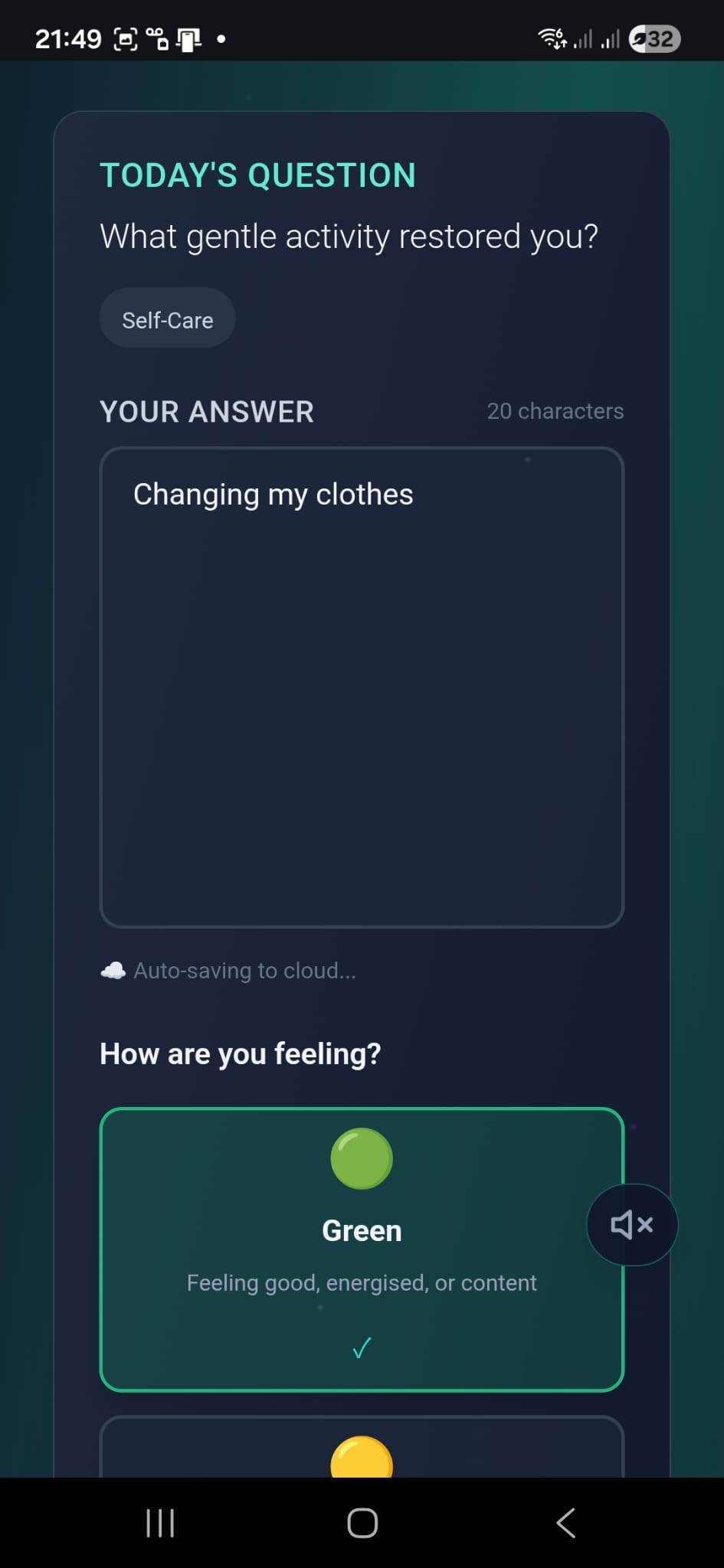
Coji Journal gives people a simple place to check in, reflect and notice recurring patterns in their wellbeing.

Coji Journal with a daily question and space to reflect

A systematic review and meta-analysis of randomised trials found an overall benefit across anxiety, depression and PTSD measures, although effects varied between studies.

Sohal et al. (2022): Efficacy of journaling in the management of mental illness: a systematic review and meta-analysis (opens in a new tab)

Eisenpower

Clearer priorities support wellbeing and performance

Clear priorities help reduce wasted effort, missed deadlines and overload by showing people what needs attention first.

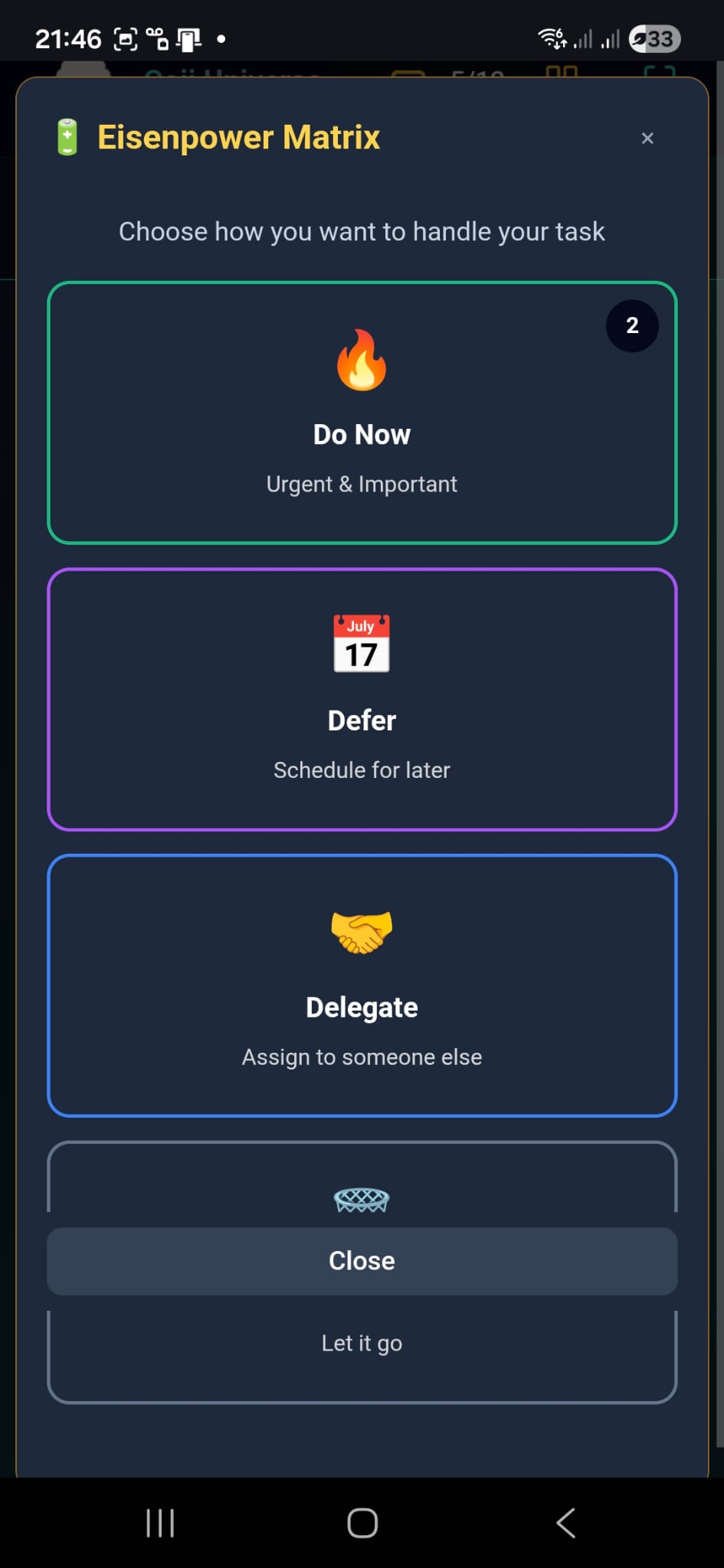
Coji Eisenpower makes competing demands visible and turns an overwhelming workload into clear priorities.

Coji Eisenpower organising competing demands into clear priorities

A meta-analysis of 158 studies linked time-management behaviours with better wellbeing and performance and lower distress. The link with wellbeing was stronger; the study did not test Coji.

Aeon, Faber & Panaccio (2021): Does time management work? A meta-analysis (opens in a new tab)

Better support starts before burnout.

  • Understand capacity.
  • Make workload manageable.
  • Personalise support.
  • Notice patterns earlier.

Plan life, not burnout.

Talk about my team

What your team gets

How Coji supports staff retention

Earlier support

Notice strain before it becomes burnout

Coji uses energy check-ins and planned activity to forecast lower-energy days. If someone repeatedly runs out of energy after a meeting-heavy day, that is a reason to talk about workload and recovery sooner.

Coji energy patterns showing energy by time of day
Practical adjustments

Turn reasonable adjustment plans into changes people can use

Neuro Maps and My Coji plans help a person describe what takes effort and which strategies might help. We can work with your company on an adjustment plan: what will change, who will do it, and when you will review it.

Coji self-report Neuro Map with attention, memory and sensory areas
Reflection

Give people room to reflect in their own journal

One question a day gives someone a place to record what is taking energy and what is helping. Over time, they have examples to draw on if they choose to discuss support with a manager or health professional.

Coji journal showing a daily question and written reflection
Reward partnerships

Work with us to recognise and reward your people

We can partner with your company to design rewards that people actually value. What would feel useful to your team? We agree the offer, funding and how it works with you before anything starts.

Coji mascot in a suit representing workplace partnerships

Before we talk

Frequently asked questions

How does this fit with our employee assistance programme?

Coji can sit alongside your EAP and occupational health support. It helps with the everyday detail: recording energy, reflecting on a week, and finding practical strategies. You still need routes to professional support and managers who can act on workload concerns.

Does Coji predict burnout?

Coji forecasts energy from a person’s recorded history and planned activity. That can prompt an earlier conversation about strain. It is an estimate, not a validated prediction of burnout or a diagnosis; a person can need support even when the forecast looks fine.

Can you help us with reasonable adjustment plans?

Yes, we can discuss working with you on practical plans. A useful plan names the barrier, an agreed change, the person responsible and a review date. Neuro Maps are self-report tools that can help someone describe their experience. The employer and employee still need to agree and carry out the adjustment.

How would a reward partnership work?

We can partner with your company to design rewards that people actually value. People can earn hours back or cash rewards based on their Coji usage. You cannot see anyone's personal data, journal entries or energy history. We agree the offer, funding and how it works with you before anything starts.

What will we be able to see about our employees?

We discuss access and billing with you. Paying for Coji does not give an employer access to an employee’s journal, energy history or Neuro Map. An employee chooses what to share in a support conversation. Any evaluation needs its own agreed scope and a way to protect people in small teams.

What evidence do you have that staff will stay?

The research above connects burnout, workplace support and recognition with outcomes relevant to retention. Pay, management and workload will also affect whether someone stays.

Can we start with a small team?

Yes. Tell me the size of your team and what you want to change. We can discuss a small starting point, the cost, and when to review whether it is useful.

Talk about your organisation

Book a 30 minute call

Tell me what would help your people.

Competing demands? Support plans that stall? People finding it hard to participate? Tell me what is happening in your organisation, and we can work out where Coji could help.